Global Incorporation

This year, my school is a global school. This means that each grade level has a different continent that they are to focus on and teach about. For first grade, our continent is Asia. One thing we have to have is a culture corner. This is a place in your room where things from Asia are set up. At the end of last year, every teacher was given a budget and they had to search for things they wanted to go in their culture corner. Our first grade team decided that we were not going to switch up our things to go to a different classroom. Instead, we were going to keep all of the things that we purchased in our classroom, but defiantly share when someone needed something. Instead, we all decided that one of the things we were going to purchase needed to be at least a pack of 5 (there are 5 teachers on my grade level) and we would distributed those things. This worked out really well because at the beginning of the school year, our stuff had come in and we each got what we ordered, as well as 4 new things.

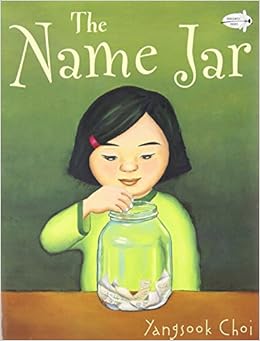
Now, we have to teach at least 1 global lesson per 9 weeks. This is where we incorporate something global into a lesson that we were already teaching. Instead of teaching just 1 lesson every 9 weeks, first grade decided to do a little bit more. We incorporated this into literacy. We have buckets that we rotate that has a different book in each bucket, but we are teaching the same concept each time. Each rotation will have a a bucket that has a global book in it. So far, I have read the book “The Story about Ping” and “The Name Jar”. My students seem to really enjoy learning about the new things from Asia.

We are also incorporating global lessons into other subjects as well. For science, we are going to be talking about rocks and soil that are from Asia. We are also going to be incorporating something Asia into math as well. I have not done this yet, but one way to do this is to use something like chop sticks as manipulative’s when students are solving word problems or math facts.

Another thing that I can do for writing is to use one of the global books that we have been reading during our whole group literacy time and have the students write about something from that story. One thing I am going to do with the book “The Name Jar” is get my students to ask their families why they were named their name. This way they can get a history of their name. I am also going to have them write their name down in class, as well as the meaning of their name. I will need to look up the meanings of all of their names prior to this though. One of the first grade teachers has already done this and her students loved it. One of her students even came up to me at the end of the day, when she was waiting for her car to pick her up, and told me that her name meant beautiful. She was so proud of this. I am hoping that my students will enjoy leaning the meaning of their names as well.

Is anyone at a school that is a global school? If so, how did you incorporate the global pieces into your lessons? I would love to get some new ideas.

Questioning

This past week, I have been teaching my students about questioning and I have found out that it is very hard for first graders to grasp this concept.

First, we talked about what is a question and what is a statement. I then gave them different questions and statements and had them move around the classroom. So, the left side of the classroom was for questions and the right side of the classroom was for statements. Most of them were able to understand the different, but there were still a few who did not. I think some also might have followed the majority of the class. If a student said it was a question, when it was really a statement, I asked them to answer that question. This seemed to help.

We also came up with different questions words that we could use and made a chart with these words on it. There are 16 question words that are on this chart.

Now, each day we are reading a different story, but the students have to discuss questions they have before read the story, while we are reading the story, as well as after reading the story. This is difficult for some of them to do. They are just not understanding what a question is. Sometime, I have them talk about a specific question word. For example, they will have to ask a question about the story using the question word “When”. This seems to help them when we do this. I do not want to do this every time because I want them to come up with the questions themselves.

Another thing that I have done was to put the students in groups, as well as partners. They each had to do their own, but they needed to work with their partner and they could also work with their groups. They needed to look at all of the question words that we came up with on our chart and write a question using each question word. Then, they were to draw a picture for each one to answer that question. This seemed to be even harder for them. Some of them just wrote each of the question words on their paper and did not turn these words into an actual question. Some of them understood the directions, but just wrote multiple questions using the same question word. I thought that if they were in partners and groups that it would help, but it did not help. I think it was because they did not work with each other very much. They just used this to talk with each other and did the work themselves.

Has anyone had this issue before? I want them to understand this, but it just seems too hard for first graders. What has everyone else done to help this? Did you do a different activity or explain it in a different way? I am just not sure. I do know that this is not just an issue in my class. This is an issue in the other first grade classes at my school.

Daily 5

This year, I have started something new with my students. I have implemented Daily 5. This is something where the students have a lot of choices throughout the day when it comes to literacy. They choose where they want to sit in the classroom, as well as what they want to work on.

At the end of last year, I visited a school that was implementing Daily 5. It was so nice to see the students engaged with their reading. They were happy and they knew why they were doing Daily 5 (to become better readers). Also, the behavior issues in these classrooms was greatly decreased. Seeing these classrooms really hooked me to this concept.

So, at the beginning of the year, I lowered 2 out of 4 of my tables (my students sit at tables, not desks), so they were not very far off the ground. These students do not sit on regular chairs, instead they sit on kinder mats that I provided for them. This way they are not completely on the floor. For the first week, the students chose where they wanted to sit, but for the second week, they still chose where they wanted to sit, but if they sat at the higher tables, they had to sit at the lower tables and if they sat at the lower tables, they had to sit at the higher tables. This way they could test both places and see where they liked the best. Now, they have chosen where they like the best sit there. I will change their seats more frequently though, but they will still get to choose where they want to be.

When it comes to the students doing their work, they choose if they want to work on read to self, read to someone, listen to reading, work or writing or word work. The only one I have implemented is read to self. We talked about how to choose “good fit books” and they chose 10 books. They also choose their spots to sit at while they are reading. I use my class list and sit with a different student each time, but still use the same order. This way they will eventually be the first to choose their spot. Once everyone has their book and they have chosen their spot, they start reading, which starts their stamina. While reading, they have to read the entire time, stay in one spot and not talk to others. If they do these things, it will break their stamina and they will have to return their books. We started out with a very low time (24 seconds), but they have been increasing their time since we have done this. We are now up to 8 minutes and 4 seconds. I am so proud of them for this. Our goal is to get to 20 minutes without breaking stamina. When we have consistently reached at least 10 minutes, we will practice read to someone. When we have consistently reached at least 10 minutes for read to someone, they will get a choice on which one they would like to do. We will continue this until we have practiced all 5 of them. Then, they will get to choose out of all 5.

So far, my students seems to really enjoy this. They do get very upset when someone breaks stamina and they try to figure out who did it. I tell them that it does not matter who broke the stamina and that they need to stop blaming each other. Sometimes, they are blaming a student who was not even the one. Either way, I don’t want them to be blaming anyone. Has anyone ever had this issue come up when they have implemented Daily 5? If so, what did you do so the students would not get upset when stamina was broken and blame others?

I am so glad that I have implemented Daily 5 this year. I know that it is a long process to get everything up and running, but in the end, it seems like it will work out better for my students.

If anyone is interested in learning more about Daily 5, here is the link to the website. There is also a picture of the Daily 5 book that I read on the website.

https://www.thedailycafe.com/daily-5

Final Reflections (Choice Words & Opening Minds)

While reading the two book “Choice Words” and “Opening Minds” by Peter Johnston, it got me thinking how language is very important, especially in the classroom. Depending on the words that are used and the questions that are asked, depends on what the students will interpret and how much they will be engaged and think deeply about a text. It is important to have students think for themselves and be able to give their opinions during discussions.

Choice Words discusses the relationships that needs to be made in the classroom. I want my students to have a positive relationship with all of their peers. One thing that I say to my students a lot is that we are all friends in our class. This helps to show that we should respect each other and treat each other fairly.

I really loved that example that Johnston mentioned about the handwriting lessons in the classroom in “Choice Words” on p.18. The teacher was able to teach a handwriting lesson to the students, without actually teaching them. Instead, they were working together to teach each other and help the teacher out. This is amazing because it give the students a sense of ownership in the classroom when they are able to help. Also, it helps with other students who are confused to hear it from a different student, being taught in a completely different way. When the teacher had the students explain what to do, it gave the teacher a way to have the students take ownership with their work and the language that they use.

One thing that really stuck out for me in “Opening Minds” was what teachers have to teach their students. I knew that it was not just academics, but I never really thought about other things that I teach my students. One thing is to be a problem solver. Students need to be able to realize a problem that they have and to find a way to problem solve it. This is important for them to learn because they will take this knowledge and carry it with them into the real words. Teachers prepare their students for the real world, but they have to show them how to think for themselves and find solutions to problems that they have.

I really liked these books because they gave me an opportunity to think about my teaching, as well as the language that I use, and reflect on it. I will be able to use these books to help me in my classroom in the near future. There were also examples that were given, which helped tremendously, to see what happened in other teachers classroom and how to change it.

Opening Minds (Chapters 7-9)

It is important to use language in a way that explains things to someone else. This is especially important with younger students. There was a great example about this in Johnston’s book on p.87. He stated the phrase “That’s distracting to me, so would you please stop?”. This is important because students need to be able to understand the reason behind things that are being told to them. If they are doing something they are not supposed to be doing, they need to be given a reason as to why they should not be doing it.

Students also need to be able to think and work together. I have tried to do this when I assign my students to different groups. During whole group reading, there are multiple students in each group that need to determine the problem, as well as the solution in the story. They need to be able to work and think together to come up with the answer. This is very hard for first graders to do. Instead, they all want to talk, be correct and find the answer themselves. They do not want to put their minds together to determine the answer.

Teachers have an important job. They need to teach students the academics, but they also need to make sure their students feel safe to be themselves. They need to be able to make connections between what they are learning about in school and how that affects their lives when they go home. On p.124, Johnston makes a powerful statement. He states, “Ultimately, we have to generate a more productive vision for society than the one that has been guiding schooling, and we must equip children with what they need to construct that society. Given what we know, failing to attend to students’ civic, social, and broader cognitive development in school is not only academically short-challenging children, it is criminal.”

Openings Minds (Chapters 5&6)

These 2 chapters from Johnston’s book “Opening Minds” got me thinking about the questions that I ask in my classroom during whole group reading. It is important to ask open-ended questions, even with first graders. They need to be able to say what they think and have a voice. How is it fair if they are only able to choose between 2 different answers.

In chapter 5, he opened with the statement “Consider the following two questions. (A) The three main reasons for the Civil War were…? and (B) From the perspective of the while male living in the twentieth century, the main reasons for the Civil War were…?”. This really stuck out to be because both of the questions are asking the same thing, but the question B is going deeper and having the students put themselves in the question. I can certainly do this with my first graders. While I am reading a story to them, I can have them imagine they are a character in the story and have them answer the questions through the characters perspective.

In chapter 6, there was a quote by Atticus Finch in “To Kill a Mockingbird”. The quote stated; “If you can learn a simple trick, Scout, you’ll get along a lot better with all kinds of folks. You never really understand a person until you consider things from his point of view… until you clim inside of his skin and walk around it.” This makes me think about when I teach persuasive writing. I am trying to teach my students how to persuade the reader about their topic, but they have a lot of trouble with this. One thing I can do to help is to incorporate this into my whole group reading. The students can persuade someone of something that is based on a certain character in the story; not their own views. This may help with their writing.

Opening Minds (Chapters 1-4)

The book “Opening Minds” by Peter Johnston gets you thinking a lot about the language that you use with your students. Even one word can change the meaning, as well as the outcome, for your students.

On p.3, Johnston stated that a first grade teacher, Pegeen, was reading a story and someone came into the classroom, so she got distracted from her reading. She said to her students; “I just made a big mistake as a reader. I got distracted when someone came into the room. So, I’m going to reread this section here”. I like how the teacher told her students this because it showed that she is human and she makes mistakes as well.

What Pegeen said that to her students, it got me thinking about the students in my classroom, as well as a time today when I was reading a story to them. I was reading the book “If I ran a zoo” by Dr. Seuss. This was the first time that I have read this book and if you have not read it before, it has some challenging words all throughout the book. It is also a very long story. Well, I was reading this book and I kept getting tongue tied. This happened on about every page. Sometimes more than once per page. I was getting pretty frustrated with this, but I kept reading. I do not know if my students knew how frustrated I was, but they must of known something. A few times, I even stopped and informed my students that I needed to read a part again. We also talked about how the story has many rhyming words in it.

Looking back at this book, I realized that it was a good thing for me to be frustrated with reading this book, as well as to tell my students that I was going back to re-read certain parts in the book. This lets my students know that I am human and I make mistakes as well. They should not be afraid to make mistake because everyone does.

Choice Words (Chapters 7&8)

These 2 chapters were very interested and eye opening; especially chapter 7. I think I have yellow highlighter more in the first couple pages than in the entire book.

I love the phrase on p.66 that states, “Where are we in this?” This is very powerful because it shows collaboration. In my classroom, I want it to be friendly environment where everyone works together, but in reality, it does not always go that way. My students argue a lot, and there is a lot of name calling, especially recently. I do not know what happened, maybe it was the break with all of the snow. Due to this, I want my students to work together, which will hopefully help this situation. Maybe if I use different language then it would help.

Also issue that I have been dealing with a lot is interruption. A lot of my students talk while others are talking and it get very frustrating. I have to continually redirect them so they will pay attention. I loved how Johnston mentioned the phrase, “You guys say such important things, it amazes me you would talk while others are talking.” This is wonderful because it makes the students aware of the issue, but it also respects the speaker at the same time. It also reminds the students why it is important to listen. When they do pay attention, I would love to say “I love the way you’re really listening to one another”. I could also say this phases not only when one student is talking to the whole group, but when they are talking with their A/B buddies and they are engaged in the conversation because they are listening to what the other student has to say. I could even use this now in my classroom because this does happen and they do have meaningful conversations with each other.

When Johnston stated; “Are there any other ways to think about this? Any other opinion?”, it got me thinking about my whole group and small group math time, especially my whole group. I have been having the students discuss different ways they solved a particular problem, but I also have other students come up and explain how they solved the same problem, but they used a different strategy. I really like doing this because I want my students to learn from each other and if a way they thought of is not working, hopefully another student will explain their way and it may be easier for them.

Choice Words (Chapters 5&6)

In theses chapters, Johnston mentions that throughout the day, teachers do most of the talking. I completely agree with that. Teachers do most of the talking, while the students are listening.

In my school, we have started something a little different with math. Students need to be doing most of the talking, and they need to be able to have their manipulatives out and use time to figure out how to do something by themselves. Students also need to be having independant practice time in order to try and figure things out for themselves first. We also talk about different ways to solve word problems, which is something that Johnston mentioned as well.

Another thing that Johnston mentioned that I feel is important for students is to have “thinking time”. I try to do this in my classroom as much as I can, especially during whole group reading. If I ask a question to my students, I try to give them time to think about it prior to talking as a whole group, or with their buddy. They need to be able to find their thoughts first, before they hear it from someone else.

There are many different things that Johnston mentioned that are very important for students to do. I feel that I need to do a better job with doing these things more often with my students.

Choice Words (Chapters 3&4)

While reading these chapters, I kept going back to when Johnston mentioned about bringing the characters and careers into the classroom.

“Building an identity means coming to see in ourselves the characteristics of particular categories (and roles) of people and developing a sense of what it feels like to be that sort of person and belong in certain social spaces.”

This really stuck out to me because we want our students to realize that what they are learning is not just because they have to and that they will only use it in the classroom. Instead, we want students to realize that their education is important and the information and skills they are learning will help them succeed even when they are not in the classroom.

One example of this is during writing. We want our students to be in the role of being a writer and talk about what a writer would do. We can also do this in every subject and I feel that it will have a great impact on students because they will be able to put themselves in other roles.

Another parts of these chapters that really got to me was when Johnston was discussing Mandy and what she thought a good writers, good reader and researcher were. It seemed to me that she was basically naming off just classroom expectations and not relating a good writer to actually writing, or a good reader to actually reading. This made me feel upset because the classroom expectations just seemed to be drilled into her brain and it was overcoming everything else.

My hope is for my students to realize that what they are learning is important and that they will take these skills and use them and build upon them throughout their lives.